Research
We uncover how protein motion becomes biological function
The Van Horn Lab studies ion channels and other membrane proteins, and other biomolecular systems to understand how structure, dynamics, molecular interactions, and allostery control signaling, sensation, and disease. By integrating structural biology, biophysics, computation, and cellular assays, we connect conformational dynamics and allosteric mechanisms with physiological function.
Core Research Areas
Sensory Transduction & Pain Pharmacology
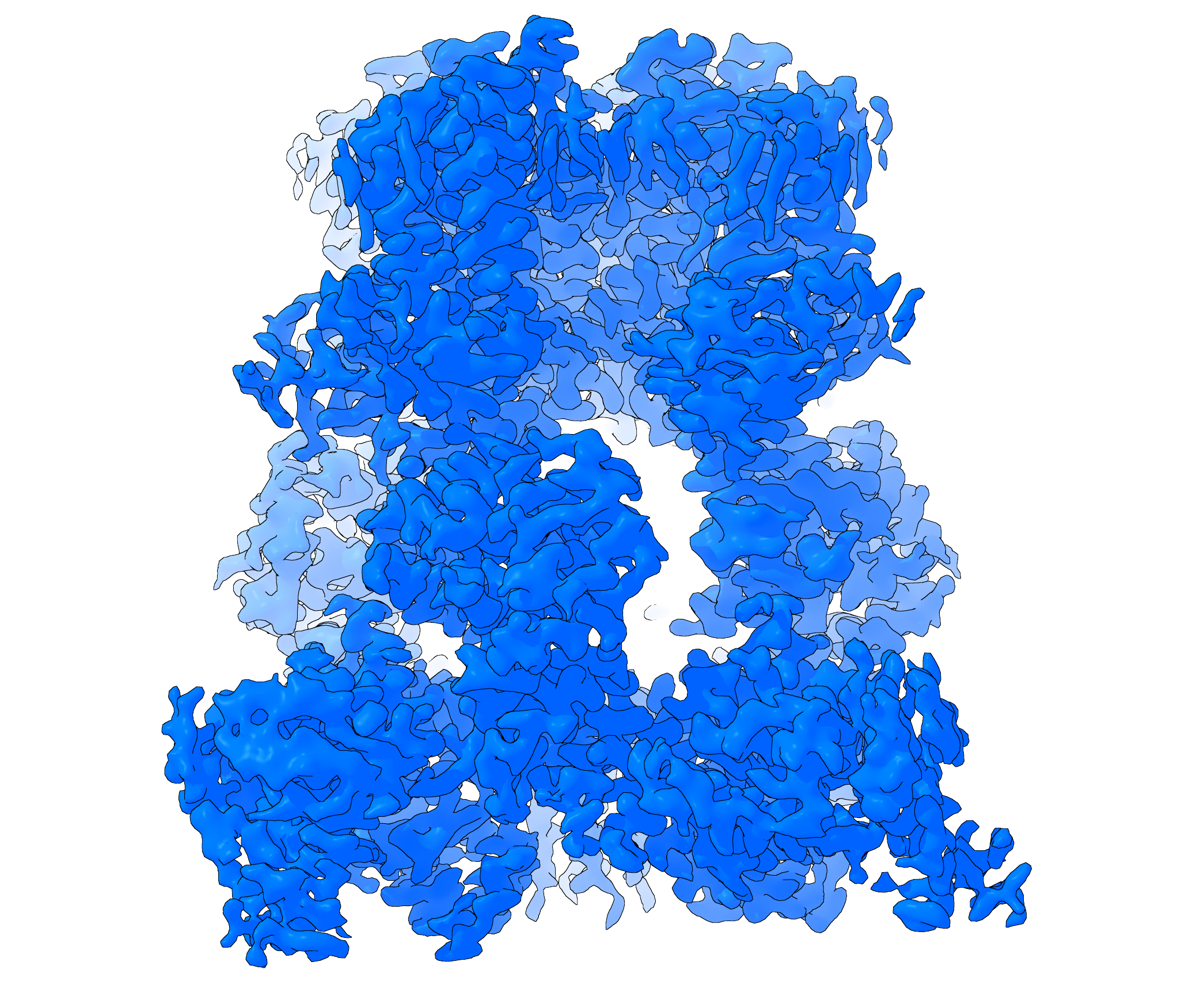
We investigate sensory ion channels like TRPV1 and TRPM8, which detect temperature, chemical signals, and other environmental stimuli. By determining how agonists and antagonists reshape channel structures and conformational ensembles, we identify molecular principles that could guide more selective, non-opioid approaches to treating pain.
Conformational Dynamics and Allostery
Ion channels are not static structures; they move among distinct conformational states that determine how they respond to drugs and cellular signals. We investigate how ligands, modulatory proteins such as PIRT, and the surrounding lipid membrane reshape these conformational ensembles and allosteric communication pathways to control channel gating..
Disease-Linked Channelopathies
Small changes in ion-channel sequence can substantially alter cellular excitability. We investigate how inherited and acquired variants affect protein stability, trafficking, conformational dynamics, and channel gating, connecting molecular defects with cellular dysfunction and disease.

An Integrated Methodological Toolkit
Biological function emerges from dynamic conformational ensembles, not static snapshots. We capture these functional transitions using a multi-scale approach:
- Nuclear Magnetic Resonance (NMR) Spectroscopy: Measuring site-specific conformational dynamics, structural flexibility, and ligand-induced perturbations in native-like environments.
- Cryo-Electron Microscopy (Cryo-EM): Resolving high-resolution structural architectures of membrane proteins across distinct functional states.
- Electrophysiology: Using whole-cell patch-clamp techniques to quantify real-time channel kinetics, gating behaviors, and functional cellular responses.
- High-Throughput Screening (HTS): Coupling functional cell-based assays with chemoinformatics to rapidly identify novel channel modulators and accelerate therapeutic discovery.
Why It Matters
Ion channels and other membrane proteins are important therapeutic targets, yet their behavior cannot always be understood from static structures alone. Conformational dynamics, allosteric interactions, and the surrounding lipid environment can profoundly influence how these proteins respond to ligands and transmit signals. By connecting molecular motion to cellular physiology, we seek to reveal new mechanisms and therapeutic opportunities for chronic pain, sensory disorders, channelopathies, and other diseases involving altered protein function.